

For many years, accessible bathrooms were associated with purely functional spaces where aesthetics took a back seat. However, that perception has changed completely. Today, it is possible to create an accessible bathroom that combines comfort, safety and modern, elegant design to complement any style of home.
Careful planning allows you to make the most of every square metre without compromising on quality materials. A well-executed renovation can also improve the quality of life of those who use the bathroom every day and increase the value of the property.
If you are considering an accessible bathroom renovation, it is worth understanding which features are essential and which current trends can help you achieve a practical and attractive result.
Essential Features of an Accessible Bathroom Renovation
Accessibility goes far beyond removing architectural barriers. The aim is to ensure that anyone can use the bathroom comfortably, safely and independently, regardless of their age or mobility.
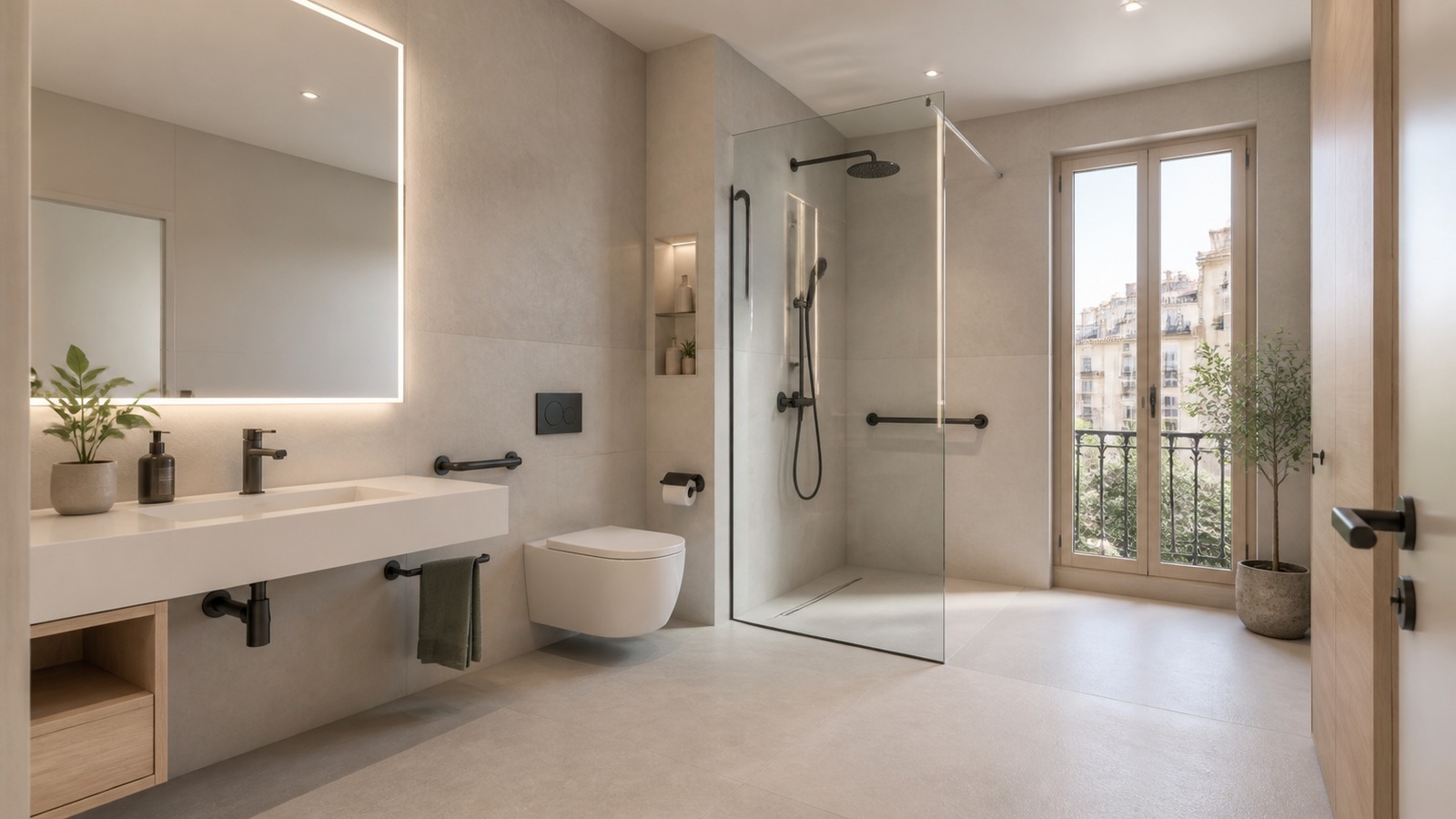
One of the most common improvements is replacing the bathtub with a level-access shower tray. This solution removes obstacles, makes access easier and creates a greater sense of visual space. It also makes it possible to install an easy-opening shower screen or even create an open shower area that allows greater freedom of movement.
The flooring also plays an important role. Slip-resistant flooring is recommended to reduce the risk of falls, particularly when the floor is wet. There are now numerous options with finishes that replicate stone, wood or concrete, meaning safety no longer has to come at the expense of aesthetics.
Another essential consideration is circulation space. An accessible bathroom should allow people to move around easily and provide enough clear floor space for comfortable manoeuvring. This means the layout must be studied carefully before work begins.
A wall-hung washbasin is another widely used solution. As it does not have a vanity unit underneath, it leaves enough clear space to approach comfortably while creating a light, contemporary appearance. It can also be combined with strategically positioned storage units to maintain sufficient storage capacity.
When it comes to the toilet, there are models available in different heights and with ergonomic designs that make them easier to use. If support rails are required, they can now be incorporated with discreet finishes and designs that blend seamlessly with the rest of the bathroom.
Bathroom taps have also evolved considerably in recent years. Single-lever mixers, thermostatic systems and sensor-operated taps are easier to use and help improve everyday comfort.
Lighting is another element that should not be overlooked. A well-lit bathroom makes everyday tasks easier and improves the overall perception of the space. Ideally, uniform general lighting should be combined with dedicated light sources around the mirror.
If you are thinking about renovating your bathroom, contact us and tell us what you need. Our team of specialists in bathroom renovations in Valencia can combine functionality, design and accessibility in your renovation project.
All these features form part of a successful accessible bathroom renovation, where every decision is intended to make the space easier to use without compromising on an elegant, contemporary finish.
How to Combine Accessibility with Modern Bathroom Design
Functionality is important, but design also influences our sense of well-being. A well-designed bathroom conveys order, spaciousness and brightness, regardless of its size.
Clean lines and uncluttered spaces are among the leading trends in modern bathroom design. Removing unnecessary elements makes the bathroom more comfortable to use while giving it a cleaner visual appearance.
Light colours remain a reliable choice. Shades such as white, beige, soft grey and sand help maximise natural light and make the bathroom appear larger. These tones can be combined with black details, natural wood or metallic finishes to add character.
Large-format wall and floor tiles are also increasingly popular. By reducing the number of visible grout lines, they create a sense of visual continuity and make cleaning easier, which is particularly beneficial in a space used every day.
Wood treated for use in humid environments has become a prominent feature in interior design. When used for furniture, worktops or decorative details, it adds warmth and moves away from the cold, clinical appearance traditionally associated with accessible bathrooms.
Built-in shower niches are another popular solution. They replace conventional shelving, keep toiletries organised and give the bathroom a much cleaner, more contemporary appearance.
Large mirrors help reflect more light and enhance the feeling of spaciousness. When fitted with perimeter LED lighting, they also improve visibility and add a contemporary touch to the overall design.
The current trend for bathroom accessories focuses on integration. Toilet roll holders, towel rails and support rails can be selected in finishes that match the taps, creating a consistent and carefully coordinated appearance.
Storage should also be considered carefully. Wall-hung units, easy-opening drawers and bespoke solutions help keep the bathroom organised without overcrowding the space.
Technology is also becoming increasingly common in modern bathrooms. Anti-fog mirrors, dimmable lighting, smart toilets and temperature-control systems can improve the everyday experience without disrupting the bathroom’s design.
Personalisation is another important consideration. Every user has different needs, so the layout should be adapted to how the space will be used. Individual planning makes it possible to create a bathroom that remains functional both now and in the future.
A modern design does not depend solely on the materials selected. It is the right combination of lighting, colours, layout and finishes that creates a pleasant, comfortable and visually balanced environment.
Working with experienced professionals is essential to finding the right balance between accessibility and aesthetics. A carefully planned project makes it possible to maximise the available space and select the most appropriate solutions for each home.